
Blog
Repmold: Powerful New Technology Changing Manufacturing Fast

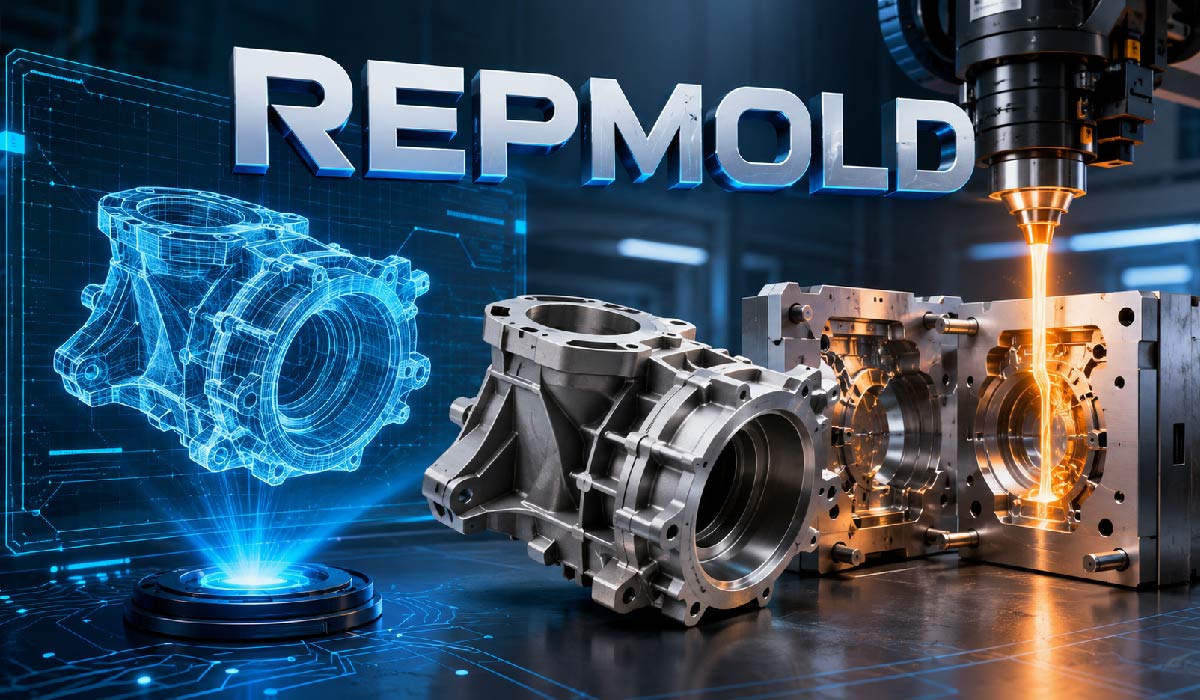
Repmold is a modern manufacturing process that combines repair, molding, and digital replication to recreate or produce parts with high precision. It uses CAD design, AI-driven systems, and advanced materials to improve speed and accuracy. Repmold is a faster, more flexible, and cost-effective alternative to traditional manufacturing methods.
Introduction
Repmold is quickly becoming one of the most searched and discussed topics in modern manufacturing, especially as industries look for faster and smarter ways to produce parts. In 2026, businesses are under pressure to deliver products quickly while maintaining quality and reducing costs. This growing demand has created strong interest in advanced technologies like Repmold, which promise to transform how production works. Many companies, from startups to large manufacturers, are now exploring Repmold as a solution for faster product development and improved efficiency.
Traditional manufacturing methods have long been the backbone of production, but they come with several challenges. Processes like injection molding and machining often require expensive tooling, long setup times, and limited flexibility. If a design changes, companies must start over, which increases costs and delays production. Downtime caused by broken parts or supply chain issues can also lead to major financial losses. These limitations have made it clear that industries need a more adaptable and efficient solution.
Repmold offers that solution by combining digital design, automation, and advanced materials into one streamlined process. It allows companies to design, test, and produce parts faster than ever before while maintaining high quality. In this article, we will explore how Repmold works, the technologies behind it, its benefits, real-world applications, and why it is shaping the future of manufacturing.
The Evolution of Molding – From Traditional Methods to Repmold
Molding has been a key part of manufacturing for many years, helping industries produce parts in large quantities. Traditional methods like injection molding, die casting, and compression molding were once considered revolutionary because they allowed companies to create identical products efficiently. These methods are still widely used today, especially for mass production, but they come with several limitations that make them less suitable for modern needs.
One major limitation of traditional molding is the high cost of tooling. Creating molds from metal can take weeks or even months, and any design change requires a completely new mold. This lack of flexibility slows down innovation and increases expenses. Additionally, traditional methods often generate material waste and require significant energy, making them less environmentally friendly. The long production cycles also make it difficult for companies to respond quickly to market changes.
With the rise of digital technology, manufacturing began to evolve. Tools like Computer-Aided Design (CAD), automation systems, and 3D printing introduced new ways to design and produce parts. These technologies allowed engineers to create digital models, test them virtually, and produce prototypes quickly. As these advancements improved, they laid the foundation for a more advanced process known as Repmold.
Repmold represents the next step in this evolution by combining traditional molding principles with digital innovation. It allows manufacturers to create, modify, and replicate molds efficiently without starting from scratch. This shift has made production faster, more flexible, and better suited to the demands of modern industries.
How Repmold Works – Step-by-Step Process
Repmold follows a structured and efficient workflow that connects digital design with physical production. The process begins with understanding the part that needs to be created or repaired and then moves through several stages to produce a final product that meets exact specifications.
Step 1 – Digital Scanning & Reverse Engineering
The process starts by scanning the existing part using advanced 3D scanning technology. This creates a highly accurate digital model of the object. If the part is damaged or incomplete, engineers use CAD software to rebuild the missing sections and create a complete design. This step ensures that the final product matches the original dimensions.
Step 2 – Mold Design & Development
Once the digital model is ready, engineers design the mold using specialized software. They simulate different conditions such as pressure and temperature to ensure the mold will perform well during production. This reduces errors and improves efficiency.
Step 3 – Material Selection
The next step involves choosing the right material based on the part’s function. Materials such as polymers, resins, or composites are selected depending on factors like strength, flexibility, and heat resistance.
Step 4 – Casting or Replication
The selected material is then poured or injected into the mold. Automated systems ensure that the process is controlled and consistent, producing parts that match the original design.
Step 5 – Curing & Finishing
After casting, the material is allowed to cure. This may involve heat or chemical processes that strengthen the part. Once cured, the part is polished and finished to meet quality standards.
Step 6 – Quality Control
Finally, the product is inspected using sensors and precision tools. This ensures that every part meets the required specifications before it is used in production.
Core Technologies Behind Repmold
Repmold relies on several advanced technologies that work together to deliver speed, precision, and efficiency. One of the most important tools is Computer-Aided Design, which allows engineers to create detailed digital models of parts and molds. These models can be easily modified, tested, and shared, making the design process faster and more flexible.
3D printing, also known as additive manufacturing, plays a key role in rapid prototyping. It allows manufacturers to create physical models quickly, test them, and make adjustments without wasting time or materials. CNC machining is another important technology that provides high precision when creating molds or parts from solid materials.
Artificial Intelligence and machine learning enhance the Rep mold process by analyzing data and optimizing production. These technologies can predict potential issues, improve designs, and increase efficiency over time. IoT sensors and automation systems also contribute by monitoring production in real time, ensuring consistent quality and reducing human error.
Together, these technologies make Repmold a powerful and intelligent manufacturing solution.
Key Features That Make Repmold Different
Repmold stands out because of its unique combination of speed, precision, and flexibility. One of its most important features is high accuracy, which ensures that every part produced matches the original design with minimal variation. This level of precision reduces the need for additional adjustments and improves overall product quality.
Another key feature is fast production. Repmold significantly reduces the time required to design and manufacture parts, allowing companies to bring products to market more quickly. The process is also highly flexible, enabling manufacturers to make design changes without starting over.
Repmold also supports scalable production, meaning companies can produce a single prototype or thousands of identical parts without losing quality. Its digital replication capabilities allow for easy storage and reuse of designs, making the process more efficient and cost-effective.
Repmold vs Traditional Molding – Complete Comparison
When comparing Repmold to traditional molding methods, several differences become clear. In terms of speed, Rep mold is much faster because it uses digital design and automated systems. Traditional methods often require weeks to create molds, while Rep mold can produce them in a much shorter time.
Cost is another major factor. Traditional molding involves high tooling costs, especially for complex designs. Rep mold reduces these costs by eliminating the need for repeated manual processes. Flexibility is also a key advantage, as the Rep mold allows for easy design changes, while traditional methods require starting from scratch.
In terms of accuracy, Repmold uses digital models and automated systems to ensure consistent results. Traditional methods may involve more human error, leading to variations in quality. Repmold also generates less waste, making it more environmentally friendly.
Overall, Rep mold offers a more efficient and modern approach to manufacturing, making it a better choice for many industries.
Major Benefits of Using Repmold
Repmold provides several important benefits that make it attractive to manufacturers. One of the biggest advantages is faster production time, which allows companies to meet deadlines and respond quickly to market demands. This speed also helps reduce downtime, especially when replacing or repairing parts.
Cost reduction is another key benefit. By minimizing material waste and eliminating expensive tooling, Rep Mold helps companies save money. It also improves product quality by ensuring high precision and consistency.
Customization is another strong advantage. Repmold allows manufacturers to create unique designs and adjust them easily based on customer needs. This flexibility is especially useful in industries where product requirements change frequently.
Sustainability is also an important benefit. Rep mold uses resources more efficiently and produces less waste, making it a more environmentally friendly option. Additionally, on-demand manufacturing allows companies to produce parts only when needed, reducing inventory costs and improving efficiency.
Industries Where Repmold Is Used
Repmold is used across many industries because of its versatility and efficiency. In the automotive sector, it helps create custom parts and replace damaged components quickly. This reduces downtime and improves vehicle performance.
In aerospace, Repmold is used to produce lightweight and precise components that meet strict safety standards. The healthcare industry uses it to create customized medical devices, prosthetics, and surgical tools tailored to individual patients.
Electronics companies rely on Rep mold to produce small and complex parts with high precision. In construction, it is used to replicate design elements and create durable components. Manufacturing industries also use Rep molds for rapid prototyping and small-batch production.
These applications show how Repmold is transforming production across different sectors.
Role of AI and Automation in Repmold
Artificial Intelligence and automation play a major role in making Repmold efficient and reliable. AI helps optimize designs by analyzing large amounts of data and identifying the best solutions. It can also predict potential problems, allowing manufacturers to fix issues before they occur.
Automation improves production by controlling processes such as material flow, temperature, and pressure. This reduces the need for manual intervention and ensures consistent results. Machine learning allows the system to improve over time by learning from past projects.
Together, AI and automation make Repmold a smart manufacturing solution that combines human expertise with advanced technology.
Repmold and Industry 4.0
Repmold fits perfectly into the concept of Industry 4.0, which focuses on smart and connected manufacturing systems. It uses digital tools, real-time data, and automation to improve efficiency and quality.
Smart factories use Rep mold to produce parts quickly while monitoring performance through connected systems. Cloud-based platforms allow teams to share designs and data easily, improving collaboration. Real-time tracking ensures that production stays on schedule and meets quality standards.
This integration makes Repmold an important part of the future of manufacturing.
Real-World Applications and Case Examples
Many companies are already using Repmold to improve their production processes. In the automotive industry, manufacturers have reduced lead times by using Rep mold to create molds quickly. This allows them to launch new products faster.
Healthcare companies use Rep mold to create customized medical devices, improving patient care. Electronics manufacturers rely on it to produce precise components for modern devices. Rapid prototyping is another common application, allowing companies to test and refine designs quickly.
These examples show how Repmold is making a real impact in different industries.
Challenges and Limitations of Repmold
Despite its advantages, Repmold also has some challenges. One of the main issues is the high initial investment required for advanced equipment and technology. This can be difficult for smaller companies.
Training is another challenge, as workers need to learn new skills to operate digital tools and automated systems. Material limitations can also affect the process, as not all materials are suitable for Repmold.
Integration with existing systems can be complex, and data security is an important concern in digital manufacturing. Some companies may also resist change, preferring traditional methods.
Cost and ROI of Repmold Technology
Although Repmold requires an initial investment, it offers strong returns over time. Companies save money by reducing material waste, lowering production costs, and minimizing downtime. Faster production cycles also increase efficiency and profitability.
The return on investment becomes clear as companies produce high-quality parts more quickly and at lower costs. This makes Rep mold a smart long-term investment.
Environmental Impact and Sustainability
Repmold is more environmentally friendly than traditional methods. It reduces waste by using materials efficiently and allows for recycling in some cases. Energy consumption is also lower due to optimized processes.
By reducing the need for large-scale production and transportation, Rep mold helps lower carbon emissions. This makes it a sustainable choice for modern manufacturing.
Skills and Training Required for Repmold
To use Repmold effectively, workers need a combination of technical skills. Knowledge of CAD software is essential for creating and modifying designs. Understanding materials helps in selecting the right options for different applications.
Machine operation skills are also important, as well as the ability to analyze data and improve processes. Continuous learning is necessary to keep up with new technologies.
Future of Repmold – Trends and Predictions
The future of Repmold looks very promising as technology continues to evolve. AI will become more advanced, allowing for fully automated systems that require minimal human intervention. Smart factories will use Rep mold to produce parts quickly and efficiently.
New materials, including self-healing compounds, may improve durability and performance. Global adoption is expected to grow as more industries recognize the benefits of Rep mold.
Why Repmold Is the Future of Manufacturing
Repmold is shaping the future of manufacturing by offering faster and more efficient production methods. It provides companies with a competitive advantage by allowing them to innovate quickly and respond to market demands.
As customization becomes more important, Rep mold makes it easier to create unique products. Its integration with digital technologies also supports the ongoing transformation of industries.
Conclusion
Repmold is a powerful and innovative manufacturing process that is changing how industries produce and repair parts. By combining digital design, advanced materials, and automation, it offers a faster, more flexible, and cost-effective solution compared to traditional methods.
As technology continues to advance, Rep mold will play an even bigger role in shaping the future of manufacturing. Companies that adopt this approach can improve efficiency, reduce costs, and stay competitive in a rapidly changing market.
(FAQs)
What is Repmold in simple words?
Repmold is a modern way to create or repair parts using digital design and molding technology. It combines scanning, design, and material casting to produce accurate parts quickly and at lower cost.
How is Repmold different from traditional molding?
Repmold is faster and more flexible than traditional molding. It uses digital tools to design and modify parts easily, while traditional methods require expensive molds and longer production time.
Where is Repmold used?
Repmold is used in many industries such as automotive, healthcare, electronics, aerospace, and manufacturing. It helps create custom parts, prototypes, and replacement components quickly.
Is Repmold expensive or cost-saving?
Repmold may have a higher setup cost, but it saves money in the long run. It reduces material waste, speeds up production, and lowers overall manufacturing costs.
Why is Repmold important in modern manufacturing?
Repmold is important because it makes production faster, more accurate, and more efficient. It helps businesses innovate quickly and meet changing market demands with ease.
Read Also: Tsunaihaiya Explained: Powerful Truth About This Unique Jewelry Brand

How Does HARDVOGUE Provide Customized Solutions for Label Materials?

SOKANY Small Appliance Brand Development Trends: A Guide for Distributors
How Smart Hydraulics Are Transforming Aviation Maintenance

Seasonal Digital Marketing: Making the Most of Ramadan and Key Shopping Periods

Seasonal Security: Preparing for Ramadan, Hajj Season, and Peak Periods in Saudi Arabia

How Effective Treasury Management Helps UAE Businesses Manage Cash Flow Risk

Polyimide Flexible PCB Fabrication: The Backbone of Lightweight and Durable Electronics

Communicating Across Cultures in a Diverse Workplace

Pyjamaspapper: Meaning, History and Cozy Lifestyle Guide

Meet Dorothy Bowles Ford: What Happened to Harold Ford Sr.’s Ex-Wife?

Who Is Jan Ashley? The Untold Story Of Robert Kardashian’s Ex-Wife

Who Is Charles Donald Fegert? Shocking Truth About Barbara Eden’s Ex-Husband

Josh Winterhalt: The Private Life of Sarah Wayne Callies’ Husband

Sharon Mobley Stow: The Private Life Behind Jim Acosta’s Ex-Wife

Who Is Harlene Rosen? The Untold Story Of Woody Allen’s Ex-Wife
