
Blog
Sruffer DB: Complete Guide to Features, Architecture, and Benefits

Introduction
In today’s fast-moving digital economy, data management has become one of the most critical challenges facing modern businesses and developers. Applications now process millions of transactions, customer interactions, analytics events, IoT signals, and AI-driven insights every single day. Traditional database systems often struggle to keep up with this explosion of information, especially when it comes to real-time processing, horizontal scalability, and flexible schema design.
Performance bottlenecks, rigid data structures, and complex migrations frequently slow down innovation. This is where Sruffer DB enters the conversation as a modern, scalable, and performance-focused database framework designed to support evolving application needs. Instead of forcing organizations to choose between speed and reliability, Sruffer DB aims to deliver both through a distributed architecture and adaptive data modeling.
As businesses continue shifting toward cloud-native systems and real-time analytics, understanding Sruffer DB becomes essential for anyone building modern digital products. This article provides a comprehensive, in-depth exploration of Sruffer DB, explaining how it works, what makes it different, and why it is gaining attention in the world of advanced database technology.
What Is Sruffer DB?
Sruffer DB is a next-generation database management system built to handle structured, semi-structured, and unstructured data within a unified framework. Unlike traditional SQL databases that depend heavily on rigid schemas or NoSQL systems that sometimes compromise transactional guarantees for flexibility, Sruffer DB sits in a hybrid position that combines adaptability with reliability.
It is designed to support modern workloads such as microservices architectures, real-time analytics, SaaS platforms, and distributed cloud environments. Rather than locking developers into a single data format or scaling method, Sruffer DB offers schema flexibility while maintaining consistent performance under heavy load.
Its core purpose is to simplify large-scale data management by unifying operational and analytical workloads in one system. Sruffer DB was introduced as part of the broader shift toward distributed, cloud-native infrastructure, evolving through iterations that focused on scalability improvements, adaptive indexing, and enhanced integration capabilities.
In an era defined by big data and constant digital transformation, Sruffer DB addresses real-world pain points such as latency, schema rigidity, and infrastructure complexity, making it relevant to modern enterprises and startups alike.
How Sruffer DB Works
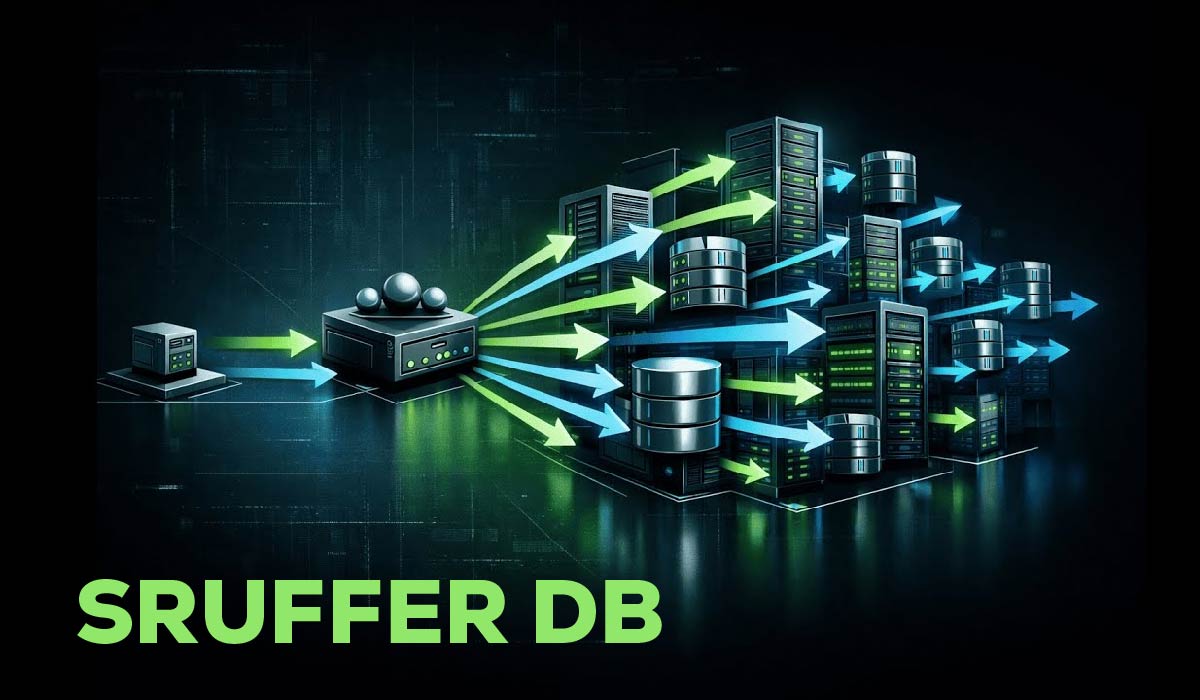
Sruffer DB operates through a distributed and modular architecture that separates data storage, indexing, and query execution into scalable layers. Unlike centralized database systems that rely on a single primary node, Sruffer DB distributes data across multiple nodes to improve availability and fault tolerance.
This distributed model ensures that if one node fails, others continue operating without disrupting application performance. The architecture combines in-memory caching for rapid data retrieval with persistent disk storage for long-term durability. This hybrid storage approach reduces latency while preserving reliability. Sruffer DB also supports a hybrid data model, meaning it can store structured records like relational tables, semi-structured formats such as JSON documents, and unstructured data, including logs or event streams.
This flexibility allows developers to evolve data models without undergoing complex schema migrations. Intelligent indexing plays a major role in performance optimization, as the system adapts indexing strategies based on usage patterns to speed up frequently accessed queries. Additionally, Sruffer DB includes real-time processing capabilities that enable streaming data analysis and immediate insights, offering a strong alternative to traditional batch processing systems that delay reporting until scheduled intervals.
Core Features and Capabilities
One of the strongest advantages of Sruffer DB is its scalability model, which supports horizontal scaling through sharding and elastic node expansion. Instead of upgrading to larger servers, organizations can add new nodes to distribute workloads more evenly. This approach reduces downtime and improves long-term growth potential. Depending on configuration, Sruffer DB can operate in masterless or leader-based cluster architectures, giving organizations flexibility based on their redundancy requirements.
Performance optimization is another key capability, supported by query acceleration mechanisms, memory-efficient caching, and adaptive workload balancing. These features ensure consistent response times even during peak traffic conditions. Security and compliance are built into the platform through role-based access control, encryption at rest and in transit, detailed audit logging, and authentication protocols that protect sensitive data.
Sruffer DB integrates natively with major cloud platforms such as AWS, Microsoft Azure, and Google Cloud, making it suitable for hybrid and multi-cloud environments. Developer-friendly tools such as dashboards, command-line interfaces, monitoring systems, and API libraries for Python, Node.js, and Java further enhance usability, allowing teams to deploy and manage infrastructure with clarity and control.
How Sruffer DB Differs from Traditional Databases
When compared to traditional SQL databases such as MySQL or PostgreSQL, Sruffer DB offers greater schema flexibility and improved performance under distributed workloads. While SQL systems are highly reliable for transactional operations, they often struggle with horizontal scaling and real-time analytics without additional tooling.
Sruffer DB reduces the need for separate analytical systems by supporting hybrid workloads within one engine. Compared to NoSQL databases like MongoDB or Cassandra, Sruffer DB provides stronger query expressiveness and better transactional guarantees while maintaining flexible data modeling. Its hybrid design bridges the gap between relational precision and NoSQL adaptability. Below is a simplified feature comparison:
Feature | Traditional SQL | NoSQL | Sruffer DB
Schema | Rigid | Flexible | Schema Optional
Scalability | Vertical | Horizontal | Elastic Distributed
Real-Time Analytics | Limited | Moderate | Built-In
Cloud Integration | External | Varies | Native
Query Expressiveness | SQL | Limited | Adaptive Query Engine
This balance of flexibility, scalability, and performance positions Sruffer DB as a versatile alternative for modern systems.
Real-World Use Cases
Sruffer DB has practical applications across numerous industries where scalability and real-time insights are essential. In e-commerce and retail, it supports flash sales, real-time inventory updates, and personalized recommendations without slowing down during traffic spikes.
Healthcare systems rely on fast and secure patient record management, where Sruffer DB’s encryption and audit logging features help maintain compliance while enabling quick data access. IoT platforms benefit from the ability to ingest thousands of time-series events per second while maintaining query speed for analytics dashboards.
Financial institutions use Sruffer DB for transaction monitoring and fraud detection, leveraging real-time processing capabilities to detect suspicious patterns immediately. SaaS startups appreciate the schema flexibility that allows them to iterate rapidly as product requirements change. These diverse use cases demonstrate that Sruffer DB is not limited to one industry but serves as a foundational technology for data-intensive applications.
Benefits of Using Sruffer DB
The benefits of adopting Sruffer DB extend beyond raw performance. Faster data retrieval improves user experience and decision-making speed, while flexible data modeling supports agile development practices. Organizations can reduce infrastructure costs by scaling horizontally instead of investing in expensive hardware upgrades.
The ability to handle both operational and analytical workloads within a unified system simplifies architecture and reduces maintenance overhead. Cross-platform support and cloud-native integration ensure compatibility with modern DevOps practices and containerized deployments.
By centralizing data management into one scalable framework, Sruffer DB enhances collaboration across departments and minimizes inconsistencies that arise from siloed systems.
Limitations and Challenges
Despite its strengths, Sruffer DB presents certain challenges that organizations should consider. Teams deeply familiar with traditional SQL systems may experience a learning curve when adapting to schema flexibility and distributed cluster management.
Migration from legacy databases can require significant planning, especially when transforming structured schemas into more adaptive models. Horizontal scaling, while powerful, demands thoughtful shard key selection to avoid uneven data distribution.
Performance tuning still requires monitoring and index strategy optimization, particularly in high-volume environments. Additionally, integration testing is necessary to ensure compatibility with existing enterprise tools. Understanding these limitations helps organizations adopt Sruffer DB responsibly and strategically.
Getting Started With Sruffer DB
Implementing Sruffer DB typically begins with installation on supported platforms such as Linux-based cloud environments or container orchestration systems like Kubernetes. After setup, developers connect applications using official SDKs available in languages such as Python and JavaScript.
A basic connection involves configuring authentication credentials and specifying cluster endpoints within the application code. CRUD operations are straightforward, allowing teams to create, read, update, and delete records using adaptive query syntax that supports structured and semi-structured formats.
Best practices include planning indexes early, establishing test environments before production deployment, and documenting schema decisions even when flexibility is permitted. Data governance policies should also be defined to ensure long-term maintainability.
Performance Benchmarks and Case Studies
Performance benchmarks indicate that distributed indexing and in-memory caching can significantly reduce latency compared to centralized relational systems under heavy load. Real-world case studies often report noticeable improvements in throughput and query response times after migration to Sruffer DB, particularly in applications with mixed analytical and transactional demands.
Organizations experiencing scaling issues during traffic surges have reported smoother performance after distributing workloads across multiple nodes. While exact results vary depending on configuration and workload patterns, documented use cases suggest that Sruffer DB performs best in environments where flexibility and concurrency are priorities.
Future Roadmap for Sruffer DB
The future of Sruffer DB appears aligned with broader trends in database innovation. AI-driven analytics features are expected to enhance predictive insights and workload optimization. Automated scaling improvements may allow clusters to adjust dynamically based on traffic patterns, reducing manual configuration requirements.
Expanded integration ecosystems will likely introduce more connectors and development libraries, making adoption easier for diverse teams. As enterprise demand for cloud-native databases continues to grow, Sruffer DB may see broader adoption in both open-source communities and enterprise editions tailored for large-scale deployments.
Conclusion
Sruffer DB represents a modern response to the evolving challenges of data management in today’s digital landscape. By combining scalability, flexible data modeling, real-time processing, and cloud-native integration, it offers a comprehensive solution for organizations seeking performance without sacrificing adaptability.
While adoption requires careful planning and awareness of limitations, the advantages of distributed architecture and intelligent indexing make Sruffer D B a compelling option for data-driven applications. As businesses generate increasing volumes of information and demand faster insights, scalable platforms like Sruffer D B will likely play an essential role in shaping the future of database technology.
Amazing Biography And Celebrity Stories At Good Time Magazine

How Does HARDVOGUE Provide Customized Solutions for Label Materials?

SOKANY Small Appliance Brand Development Trends: A Guide for Distributors

How Smart Hydraulics Are Transforming Aviation Maintenance

Seasonal Digital Marketing: Making the Most of Ramadan and Key Shopping Periods

Seasonal Security: Preparing for Ramadan, Hajj Season, and Peak Periods in Saudi Arabia

How Effective Treasury Management Helps UAE Businesses Manage Cash Flow Risk

Polyimide Flexible PCB Fabrication: The Backbone of Lightweight and Durable Electronics

Communicating Across Cultures in a Diverse Workplace

Pyjamaspapper: Meaning, History and Cozy Lifestyle Guide

Meet Dorothy Bowles Ford: What Happened to Harold Ford Sr.’s Ex-Wife?

Who Is Jan Ashley? The Untold Story Of Robert Kardashian’s Ex-Wife

Who Is Charles Donald Fegert? Shocking Truth About Barbara Eden’s Ex-Husband

Josh Winterhalt: The Private Life of Sarah Wayne Callies’ Husband

Sharon Mobley Stow: The Private Life Behind Jim Acosta’s Ex-Wife

Who Is Harlene Rosen? The Untold Story Of Woody Allen’s Ex-Wife
